
In Norway today, we live in a very particular spiritual landscape. Most people do not wake up thinking about God, sin, or eternity. They wake up to notifications, endless scrolling, work pressure, and the quiet ache of loneliness that modern life never quite fills. Many drink to relax, engage in relationships without commitment, and move through life with very little capacity for sustained attention. Reading an entire book — let alone the Bible or the Catechism — feels almost impossible for a large part of the population.
This is the real context in which the Catholic Church in Norway must do its evangelization.
When we talk about the Traditional Latin Mass (the 1962 Missal), we often speak about its beauty, reverence, and theological depth. And those things are real. However, we must honestly ask ourselves: How does a person shaped by this distracted, hyper-sexualized, and ideologically confused culture walk into a Traditional Latin Mass and find a reason to stay?
The answer, for the majority, is: they probably won’t.
The Modern Person’s Starting Point
Today’s average Norwegian has been formed by:
- Constant digital stimulation that destroys the ability to focus for more than a few minutes.
- A culture that treats sexual activity as entertainment and personal fulfillment.
- A soft socialist mentality that emphasizes comfort, equality of outcome, and the avoidance of “judgment.”
- A Church environment where, in many places, the lines have become blurred — priests participating in Pride events, heavy use of female lectors and extraordinary ministers, and a general feeling that “anything goes” as long as people feel included.
This person does not enter a church looking for mystery, silence, or ancient ritual. They enter (if they enter at all) looking for meaning they can understand, warmth they can feel, and answers that speak to the emptiness they already sense.
A one-hour Mass in Latin, with the priest facing away from the congregation for most of it, very little audible response from the people, and almost no explanation, can feel not only foreign but almost hostile to someone in this condition. It demands a level of attention, patience, and prior formation that most modern people simply do not possess.
The Honest Reality About “Traditional” Catholics
It is also important to be realistic about who currently loves the Traditional Latin Mass. Many of the most vocal defenders have never read the entire Bible. Many have not studied the Catechism in depth. Their attachment is often more aesthetic, emotional, or cultural than deeply formed by Scripture and doctrine.
At the same time, we sometimes see simple, humble people — with messy lives, little education, and many sins — who have a deeper and more living faith than some who can discuss every rubric and every historical development of the liturgy. God looks at the heart. He has always preferred the tax collector who beats his breast over the Pharisee who is proud of his perfect observance.
This should humble all of us.
The Church Must Be Welcoming — But Welcoming to What?
The Church is called to welcome everyone. Jesus welcomed prostitutes, tax collectors, and sinners without first demanding they clean up their lives. However, true welcome does not mean leaving people exactly as they are forever. It means meeting them where they are, so that they can be transformed.
If our only offering is a highly demanding, Latin-only liturgy that requires significant prior knowledge and concentration, we are effectively saying to the distracted, the broken, and the culturally formed modern Norwegian: “Become like us first, and then you may enter.”
That is not the Gospel.
The Gospel meets people in their weakness. It speaks in a language they can understand — at least at the beginning. For many in Norway, that language is Norwegian, not Latin. It is clear preaching, not only beautiful silence. It is visible community and human warmth, not only vertical reverence.
Both Forms Have a Role — But We Must Be Honest About Priorities
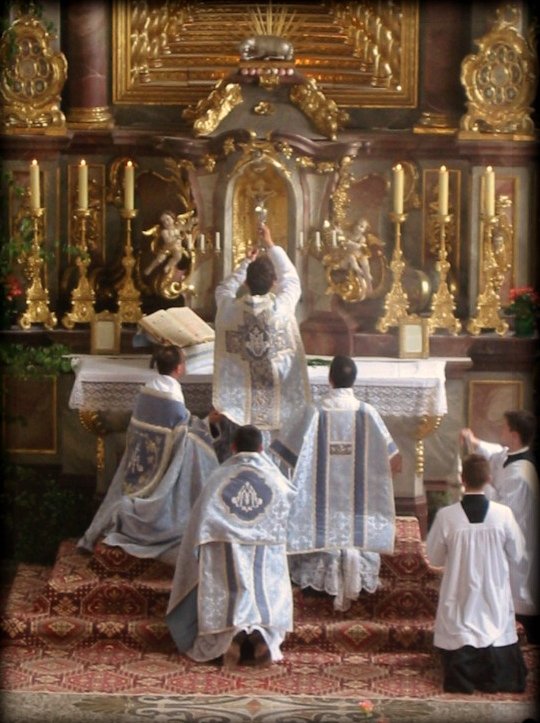
The Traditional Latin Mass is a treasure. It has formed saints. It preserves a sense of the sacred that has been badly damaged in many places. There should be space for it, and it should be celebrated well. It can be a powerful place of deepening for those who are already seeking or who have been wounded by liturgical abuse.
But we must stop pretending that it is the normal or best tool for initial evangelization in a country like Norway in 2026.
Most people who convert from Lutheranism or from complete secularism in Scandinavia do so through:
- Clear, warm preaching in their own language
- Personal relationships and authentic community
- Experiencing the sacraments in a way that feels accessible
- Seeing the faith lived in a coherent and attractive way
A person who cannot focus long enough to read a book is unlikely to suddenly develop that focus during a Latin Mass — unless something else has already touched their heart.
Photo
A Necessary Tension
The Church in Norway (and in the West) faces a real tension:
On one side, we have the need to preserve and offer the fullness of Catholic tradition, including its most beautiful and reverent expressions.
On the other side, we have the missionary duty to actually reach the people who live in front of us — distracted, wounded, ideologically confused, and often morally compromised.
If we only emphasize the first without seriously addressing the second, we will end up with beautiful liturgies attended by smaller and smaller groups of already convinced people, while the majority of Norwegians continue drifting further away.
The solution is not to reject the Traditional Mass. The solution is to be honest: different people need different doors into the same Church.
Some will enter through beauty and silence.
Most, in today’s Norway, will need to enter through clarity, welcome, and a language they can understand.
The Church must be big enough, and humble enough, to keep both doors open.