In recent years, something interesting has been happening in the corporate world: major companies are reducing or withdrawing their financial support from Pride month events (LGBT+).
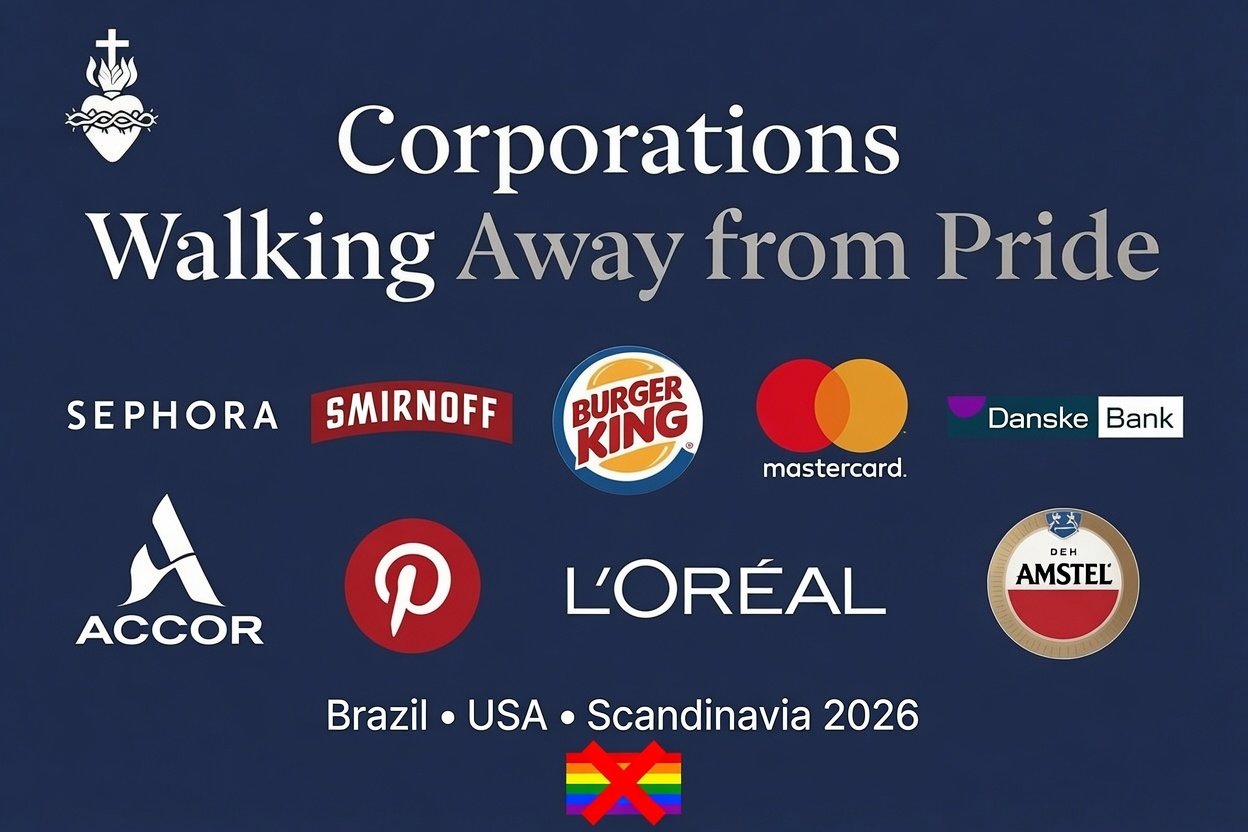
In Brazil, the 30th São Paulo LGBT+ Pride Parade (June 2026) suffered a dramatic drop of around 60% in sponsorship revenue. In 2025 there were 11 major public sponsors. In 2026 only 4 remained: Amstel, L’Oréal/La Roche-Posay, Amstel Vibes, and Philip Morris. Brands such as Sephora, Smirnoff, Accor, Pinterest, Burger King, Mercado Livre, Vivo, and others left or did not return.
In the United States, the movement is even stronger. Many companies (including Bud Light, Target, Diageo, Mastercard, and others) have drastically reduced their visible support for Pride parades. Several cities are reporting significant financial deficits in their events.
In Scandinavia, the picture varies:
- In Denmark (Copenhagen Pride), companies such as Novo Nordisk, Mærsk, Google Denmark, and Danske Bank have reduced or withdrawn their support.
- In Norway (Oslo Pride) and Sweden, sponsorship remains relatively stable for now, but the wind is also changing.
Why is this happening?
Organizers cite “lower corporate interest in diversity causes.” In other words: after years of strong corporate activism, many companies are recalculating the risk. They realize that:
- A significant portion of consumers does not support gender ideology and the trans agenda, especially when it involves children.
- Boycotts by conservative and Christian consumers can be very costly (the Bud Light case is the classic example).
- There is a general fatigue with “woke capitalism.”
A Catholic Reflection
As Catholics, we do not rejoice in anyone’s suffering. But we observe this movement with clarity: the world is beginning to realize that not all “diversity” is beneficial.
The Church has always taught that every human being deserves respect and dignity, for they were created in the image of God. At the same time, she has always rejected the ideology that confuses sex and gender, that promotes sexual confusion, and that tries to redefine marriage and the family.
This corporate retreat may be a sign that the culture is beginning to question the radical activism that dominated the last decade. It is not yet a “return to Christianity,” but it is a brake on the advance of the ideology.
As St. Benedict teaches us: Ora et labora — pray and work. This is the time for Catholics to pray with greater fervor (especially with the Rosary and the St. Benedict Medal) and to live the beauty of Catholic teaching on the body, love, and family with coherence.
The Sacred Heart of Jesus, and not the rainbow, is the true symbol of the love that saves.